Common Mistakes to Avoid When Installing Warehouse Racking in UAE
Installing the right storage system is critical for warehouses operating in the UAE’s fast-paced logistics, retail, and industrial sectors. A well-planned warehouse racking in UAE setup improves space utilization, safety, and operational efficiency. However, many businesses make avoidable mistakes during planning and installation that later lead to safety risks, higher costs, and reduced productivity.
Whether you are installing a warehouse racking system for the first time or upgrading an existing one, understanding these common mistakes can help you make smarter decisions—especially in high-demand regions like Dubai.
1. Not Assessing Warehouse Requirements Properly
One of the biggest mistakes is choosing racking without a detailed assessment of warehouse needs. Every facility differs in terms of floor space, ceiling height, load capacity, and material handling equipment.
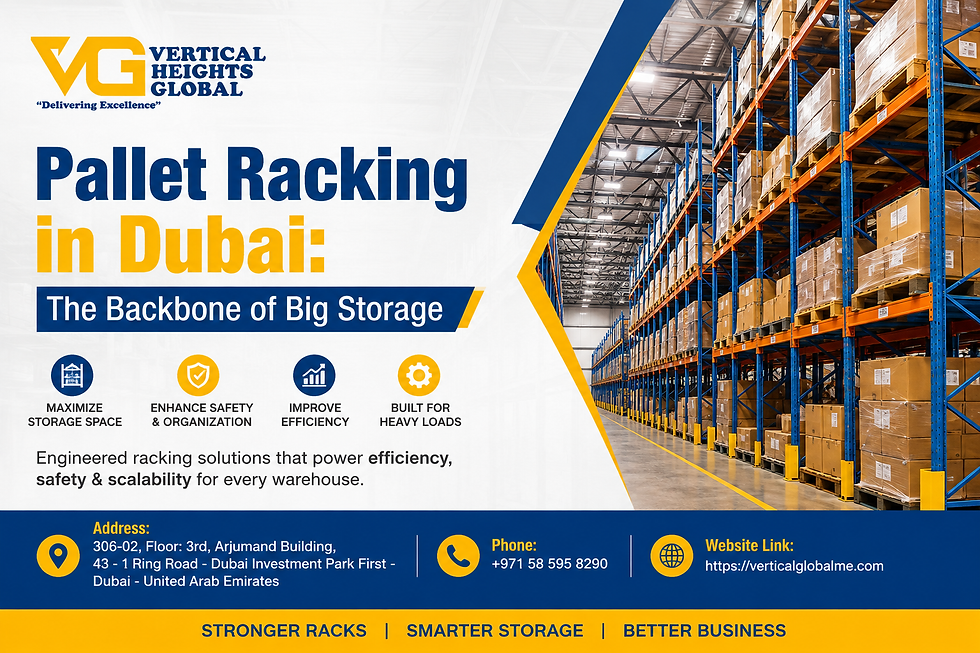
For example, a pallet racking system in Dubai used for heavy industrial goods will differ greatly from warehouse shelf racks used for light retail inventory. Failing to analyze product size, weight, and turnover rate often results in inefficient layouts or overloaded racks.
Tip: Always evaluate inventory type, load weight, forklift aisle width, and future expansion plans before finalizing racking.
2. Ignoring Local Safety Standards and Regulations
Warehouses in the UAE must follow strict safety and compliance guidelines. Ignoring these regulations during installation of warehouse racking in UAE can lead to penalties, accidents, or forced system replacements.
Improper anchoring, incorrect load labeling, and poor rack alignment are common compliance issues. This is especially critical for industrial racking in Dubai, where heavy loads and high stacking are common.
Tip: Ensure your racking supplier understands UAE safety standards and provides proper load signage and anchoring systems.
3. Choosing the Wrong Type of Racking System
Not all racking systems serve the same purpose. Many businesses select a system based only on cost rather than functionality.
For example:
Using light warehouse shelf racks for heavy pallet loads
Installing selective racking when high-density storage is required
Choosing a fixed system when flexibility is needed
A mismatched warehouse racking system leads to wasted space, inefficient picking, and higher long-term costs.
Tip: Match the racking type to your operational needs—selective, drive-in, push-back, or mezzanine systems all serve different purposes.
4. Poor Warehouse Layout Planning
Even high-quality racking fails if the warehouse layout is poorly designed. Inadequate aisle width, blocked emergency exits, and inefficient traffic flow are common mistakes during warehouse racking in UAE installations.
This issue is frequently seen in busy logistics hubs where pallet racking system in Dubai installations are rushed to meet deadlines.
Tip: Plan clear forklift movement paths, emergency exits, and loading/unloading zones before installation begins.
5. Overlooking Load Capacity and Weight Distribution
Overloading racks or uneven weight distribution is a serious safety hazard. Many warehouses fail to follow load limits, especially with industrial racking in Dubai, where heavy machinery or bulk goods are stored.
Ignoring load calculations can lead to rack collapse, damaged goods, and worker injuries.
Tip: Clearly label maximum load capacity on every level and train staff to follow proper loading practices.
6. Using Low-Quality Materials to Cut Costs
Cutting corners on material quality is a common mistake. While cheaper options may seem attractive initially, they often result in higher maintenance costs and reduced lifespan.
A durable warehouse racking system should be made from high-grade steel with proper corrosion resistance—especially important in UAE’s climate.
Tip: Invest in certified, high-quality racking that meets international standards for strength and durability.
7. Improper Installation and Lack of Professional Expertise
DIY or unskilled installation is a major risk factor. Incorrect beam placement, loose bolts, and poor anchoring compromise the entire warehouse racking in UAE setup.
This is especially dangerous for large-scale pallet racking system in Dubai installations, where precision is critical.
Tip: Always work with experienced professionals who specialize in warehouse and industrial racking installation.
8. Neglecting Future Expansion Needs
Many businesses design racking only for current inventory, ignoring future growth. As operations expand, the existing warehouse shelf racks or racking layout may no longer be sufficient.
This leads to costly reinstallation or inefficient add-ons later.
Tip: Choose a modular warehouse racking system that can be easily expanded or reconfigured.
9. Skipping Regular Inspections and Maintenance
Once installed, racking systems are often ignored until a problem occurs. In reality, regular inspections are essential to maintain safety and performance.
Damaged beams, bent uprights, and loose anchors are common issues in high-traffic industrial racking in Dubai environments.
Tip: Schedule routine inspections and immediately repair or replace damaged components.
10. Not Training Warehouse Staff Properly
Even the best warehouse racking in UAE setup can fail if staff are not trained. Improper forklift operation, incorrect stacking, and ignoring safety signs can all cause accidents.
Tip: Train employees on safe loading, unloading, and material handling practices related to your racking system.
Conclusion
Avoiding these common mistakes can save time, money, and lives when installing warehouse racking in UAE. From selecting the right warehouse racking system to ensuring compliance, professional installation, and regular maintenance, every step matters.
For reliable, safe, and scalable solutions—especially for pallet racking system in Dubai, warehouse shelf racks, and industrial racking in Dubai—partnering with experienced experts is essential. Vertical Heights Global delivers high-quality warehouse racking solutions designed to meet UAE industry standards while supporting long-term operational growth.
FAQs
1. What is the most common mistake in warehouse racking installation?
Choosing the wrong type of racking system without assessing load capacity and warehouse layout is the most common mistake.
2. Is warehouse racking in UAE required to meet safety standards?
Yes, all warehouse racking in UAE must comply with local and international safety regulations to ensure worker and inventory safety.
3. Which racking system is best for heavy loads?
A properly designed pallet racking system in Dubai or heavy-duty industrial racking in Dubai is ideal for heavy loads.
4. How often should warehouse racking be inspected?
Racking systems should be visually inspected regularly and professionally inspected at least once a year.
5. Can warehouse racking systems be expanded later?
Yes, modular warehouse racking systems can be expanded or reconfigured to accommodate future growth.


Comments