Pallet Racking System in Dubai Smart Storage Solutions

Dubai has grown into one of the busiest trade and logistics hubs in the world, and with that growth comes a constant demand for smarter storage. Warehouses across the emirate are under pressure to hold more inventory, move goods faster, and use every square foot of floor space wisely. This is exactly why so many logistics managers, facility owners, and business operators are searching for a reliable pallet racking system in Dubai that can keep pace with their growing operations.
A well-planned storage setup is no longer a luxury; it is a operational necessity. Whether a company runs a small distribution center or a massive fulfillment facility, the right racking structure determines how efficiently products move from the receiving dock to the shipping bay. In this article, we will walk through what a pallet racking system in Dubai actually involves, why it matters, the different types available, and how businesses can choose the right setup for their needs.
What Is a Pallet Racking System?
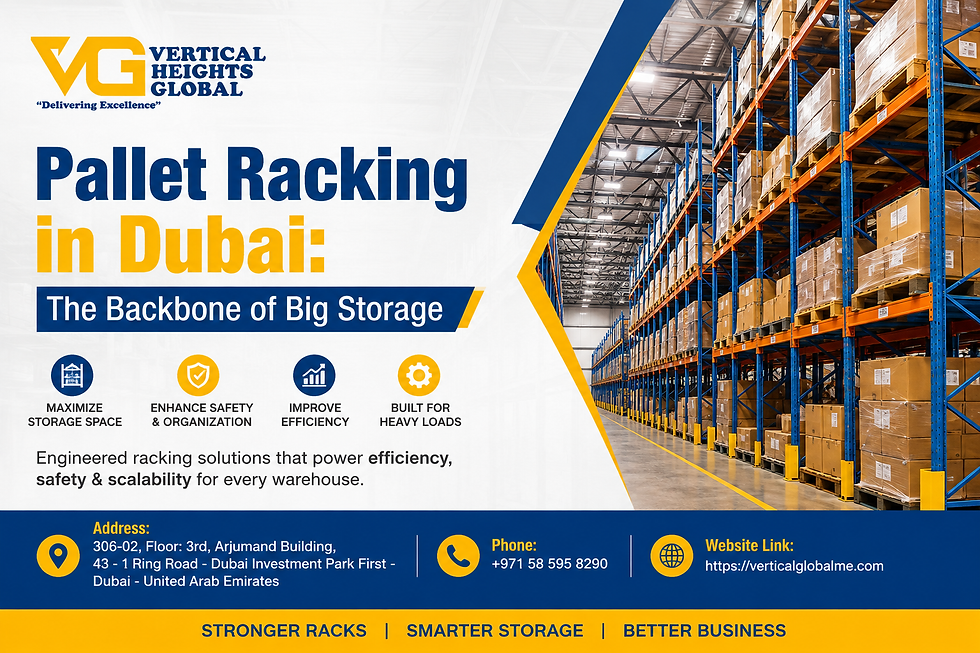
At its core, a pallet racking system is a structural framework built from vertical frames and horizontal beams designed to store palletized goods in an organized, stackable manner. Instead of piling boxes and pallets directly on the floor, businesses use these frameworks to store items vertically, which frees up valuable floor space and improves accessibility.
For any facility operating in a hot, high-traffic commercial zone like Dubai, a pallet racking system in Dubai allows warehouse teams to organize stock by category, rotate inventory efficiently, and reduce the risk of damage caused by improper stacking. It also plays a major role in workplace safety, since unstable stacks of goods are one of the leading causes of warehouse accidents.
Why Businesses in Dubai Are Investing in Better Storage
Dubai's position as a gateway between Europe, Asia, and Africa means that warehouses here handle an enormous volume of goods every single day. E-commerce growth, free zone expansion, and increasing manufacturing activity have all pushed businesses to rethink how they store products.
This is where a dependable pallet racking system in Dubai becomes essential. Companies are no longer satisfied with basic shelving; they want configurations that maximize vertical space, support heavier loads, and adapt as their inventory changes. A properly designed setup can increase storage capacity by well over 40 percent compared to traditional floor stacking, without requiring any additional square footage.
Beyond capacity, there is also a growing focus on organized warehouse shelving in UAE facilities. Many businesses are shifting away from makeshift storage solutions and adopting engineered systems that are built to local safety codes, resistant to heat and humidity, and designed with the region's logistics patterns in mind.
Types of Warehouse Racking Available in Dubai
Not every warehouse has the same needs, which is why there are multiple types of warehouse racking suited to different industries and storage goals.
Selective Pallet Racking is the most common option, offering direct access to every pallet. It works well for warehouses that need to pick a wide variety of SKUs quickly.
Drive-In and Drive-Through Racking allows forklifts to enter the racking structure itself, making it ideal for high-density storage of uniform products, such as bulk goods or seasonal inventory.
Cantilever Racking is designed for long or irregularly shaped items like pipes, timber, or furniture, where standard shelving would not be practical.
Push-Back Racking and Pallet Flow Racking use gravity or rollers to move pallets automatically, which is useful for high-turnover items following a first-in, first-out inventory approach.
Mezzanine Floor Systems are also increasingly popular, allowing businesses to add an entire additional storage level within their existing building height.
Each of these falls under the broader category of warehouse racking, and choosing the right one depends on factors like pallet weight, aisle width, forklift type, and how frequently stock needs to be accessed.
Benefits of a Well-Designed Storage System
Investing in a properly engineered pallet racking system in Dubai delivers benefits that go far beyond simply holding more boxes.
Maximized Space Utilization: Vertical storage means businesses can hold significantly more inventory without expanding their physical footprint, which is particularly valuable given the cost of commercial real estate in the emirate.
Improved Inventory Accuracy: Organized warehouse shelving in UAE facilities makes it easier to label, locate, and track stock, reducing picking errors and saving labor hours.
Enhanced Safety: A properly installed racking structure, rated for the correct load capacity, minimizes the risk of collapse, falling stock, or forklift collisions.
Better Workflow Efficiency: When goods are stored logically, staff spend less time searching for items, which speeds up order fulfillment and reduces operational bottlenecks.
Scalability: Modular racking components can be reconfigured or expanded as a business grows, which is especially useful for companies experiencing seasonal fluctuations in stock volume.
How to Choose the Right Pallet Racking System
Selecting the right setup requires more than picking the first option available. Businesses should evaluate several factors before committing to any warehouse racking installation.
First, consider the type and weight of the products being stored. Heavy industrial goods require a different frame and beam rating than lightweight retail inventory.
Second, assess the warehouse layout, including ceiling height, column spacing, and aisle width. This directly affects whether a facility can accommodate drive-in racking, narrow-aisle systems, or standard selective racking.
Third, think about inventory turnover. High-turnover items benefit from pallet flow or push-back systems, while slow-moving stock is often better suited to static selective racking.
Fourth, factor in future growth. A pallet racking system in Dubai should be flexible enough to expand as order volumes increase, without requiring a complete overhaul.
Finally, always confirm that the racking supplier follows recognized structural and safety standards, since load ratings and installation quality directly affect long-term durability.
Facilities such as Vertical Heights Global in UAE, Dubai are known for guiding businesses through this evaluation process, helping them match the right racking configuration to their specific operational needs rather than offering a one-size-fits-all solution.
Installation and Maintenance Considerations
Even the best-designed racking system needs proper installation and ongoing upkeep to remain safe and functional. Installation should always be carried out by trained professionals who understand local building codes and load-bearing requirements. Poorly installed frames, uneven anchoring, or incorrect beam spacing can compromise the entire structure.
Routine inspections are equally important. Warehouse teams should regularly check for bent frames, loose bolts, or signs of impact damage, particularly in high-traffic zones where forklifts operate frequently. Many businesses schedule quarterly safety audits to catch small issues before they become major structural problems.
Dust, humidity, and temperature swings common in the region can also affect metal components over time, so choosing coated or treated steel for any warehouse racking installation adds an extra layer of durability.
What People Search Related to This Keyword
When researching storage solutions, most searchers are not just looking for a definition. Based on common search patterns, people typically want to know:
The cost or price range of installing a pallet racking system in Dubai
Which supplier offers the best warehouse shelving in UAE for specific industries like retail, food storage, or manufacturing
How to calculate the load capacity needed for their warehouse racking
The difference between selective racking and drive-in racking
Whether custom sizing is available for irregular warehouse layouts
How long installation typically takes for a mid-sized facility
Safety certifications required for commercial racking systems in the UAE
How to maintain or repair damaged racking components
These search intents show that buyers are usually comparing practical factors such as pricing, safety, customization, and supplier reliability before making a decision, rather than simply looking for general information.
Conclusion
As Dubai continues to expand as a logistics and trade powerhouse, the demand for efficient, safe, and scalable storage solutions will only keep growing. A thoughtfully planned pallet racking system in Dubai does more than organize inventory; it improves safety, speeds up daily operations, and maximizes the value of every square meter of warehouse space.
From selecting the right type of warehouse racking to maintaining proper warehouse shelving in UAE facilities, every decision along the way impacts long-term efficiency and cost savings. Businesses that take the time to evaluate their layout, inventory type, and growth plans before installing a system tend to see the strongest long-term returns. Companies such as Vertical Heights Global in UAE, Dubai continue to support this shift by helping businesses design storage systems that are tailored to their specific operational demands rather than generic, off-the-shelf setups.
Frequently Asked Questions
1. What is the average cost of a pallet racking system in Dubai?
Costs vary widely depending on the type of racking, load capacity, and total warehouse size. Selective racking tends to be more affordable, while specialized systems like drive-in or push-back racking cost more due to their complexity.
2. How much weight can a standard pallet rack hold?
Load capacity depends on the beam and frame rating, but standard selective racking typically supports anywhere from 500 kg to over 3,000 kg per level, depending on design specifications.
3. What is the difference between racking and shelving?
Racking is generally designed for palletized, heavier loads accessed by forklifts, while shelving is used for smaller, hand-loaded items and lighter inventory.
4. How long does it take to install warehouse racking?
Installation timelines depend on the size of the facility, but a mid-sized warehouse setup can often be completed within one to two weeks, including structural inspection.
5. Can existing racking be expanded later?
Yes, most modular racking systems allow additional frames, beams, or levels to be added later, making it easier to scale storage as inventory grows.
6. What safety standards apply to racking systems in the UAE?
Racking should comply with recognized structural safety standards, including proper load labeling, anchoring, and regular inspection protocols to prevent structural failure.
7. Which racking type is best for small warehouses?
Selective pallet racking is usually the most practical choice for smaller spaces, since it allows direct access to every pallet without requiring wide aisles.
8. How often should warehouse racking be inspected?
Most safety guidelines recommend a professional inspection at least once every three to six months, along with regular visual checks by warehouse staff.

Comments